
Recurly webhooks
This document outlines the process for integrating your Recurly account with our system using webhooks to enable real-time updates for subscription events. The integration utilizes a dedicated ingestion endpoint secured via HTTP Basic Authentication.
Definition
Key benefits
Key details
Ingestion Endpoint
The designated Ingestion Endpoint for subscription change events is:
https://conduit.redfast.com/ingest/APP_ID/update_user_subscription?source=recurly
The APP_ID is a unique identifier (universally unique identifier, or UUID) for your application.
Configure the webhook endpoint
These steps configure the webhook endpoint in your Recurly account.
- Username: Your Application ID (
APP_ID), which is the UUID in the Ingestion Endpoint URL. - Password: Your Application API key, available in Pulse under Settings → Application.
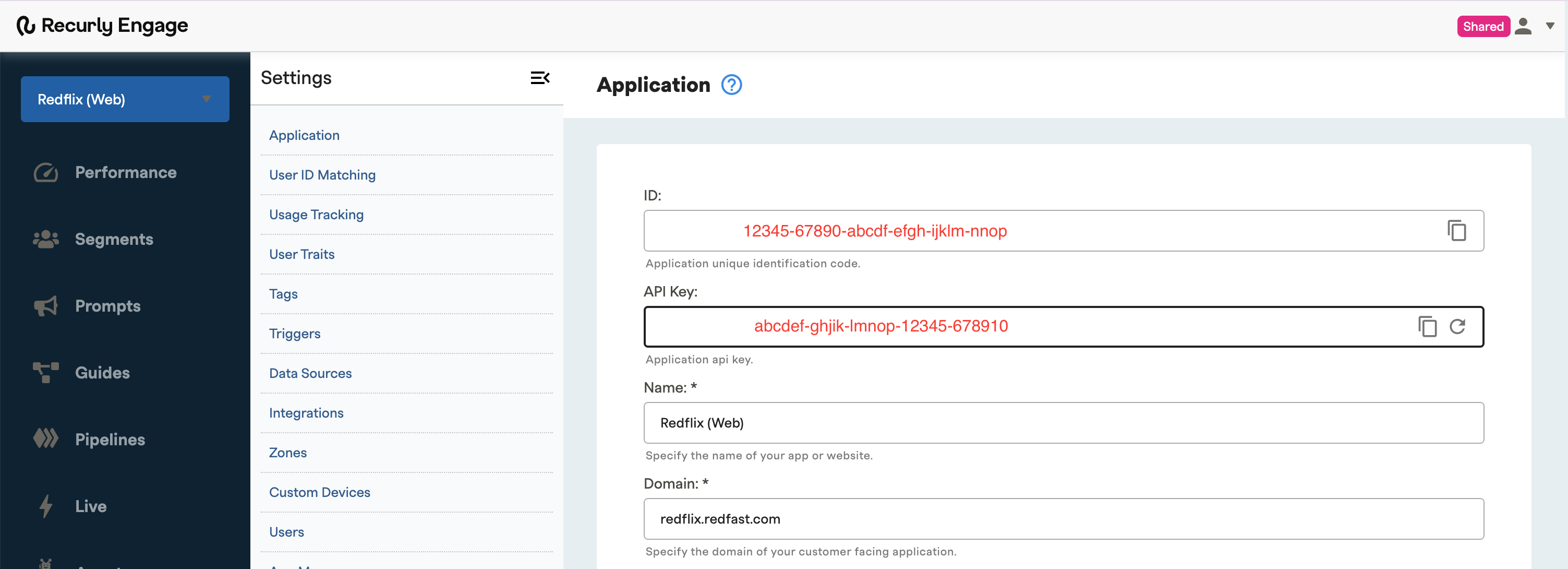
- Enter the Ingestion Endpoint URL: Input the complete URL, replacing
APP_IDwith your application UUID:https://conduit.redfast.com/ingest/APP_ID/update_user_subscription?source=recurly. - Configure authentication: Enable HTTP Basic Authentication for the endpoint.
- Enter your Application ID as the Username.
- Enter your Application API Key as the Password.
- Subscribe to events: Select the subscription-related events you want to track in real time. For a comprehensive update, we recommend subscribing to all relevant subscription change events, such as:
subscription.createdsubscription.updatedsubscription.canceledsubscription.renewedsubscription.pausedsubscription.resumedsubscription.expiredcharge_invoice.paidcharge_invoice.past_due
Engage automatically supports the following two Recurly webhook events as custom goals:
subscription.canceledbilling_info.updated
To enable tracking for these custom goals, make sure you've subscribed to the relevant events (subscription.canceled and billing_info.updated) in the Recurly webhook endpoint configuration (Step 2, item 3).
Advanced usage and custom goals
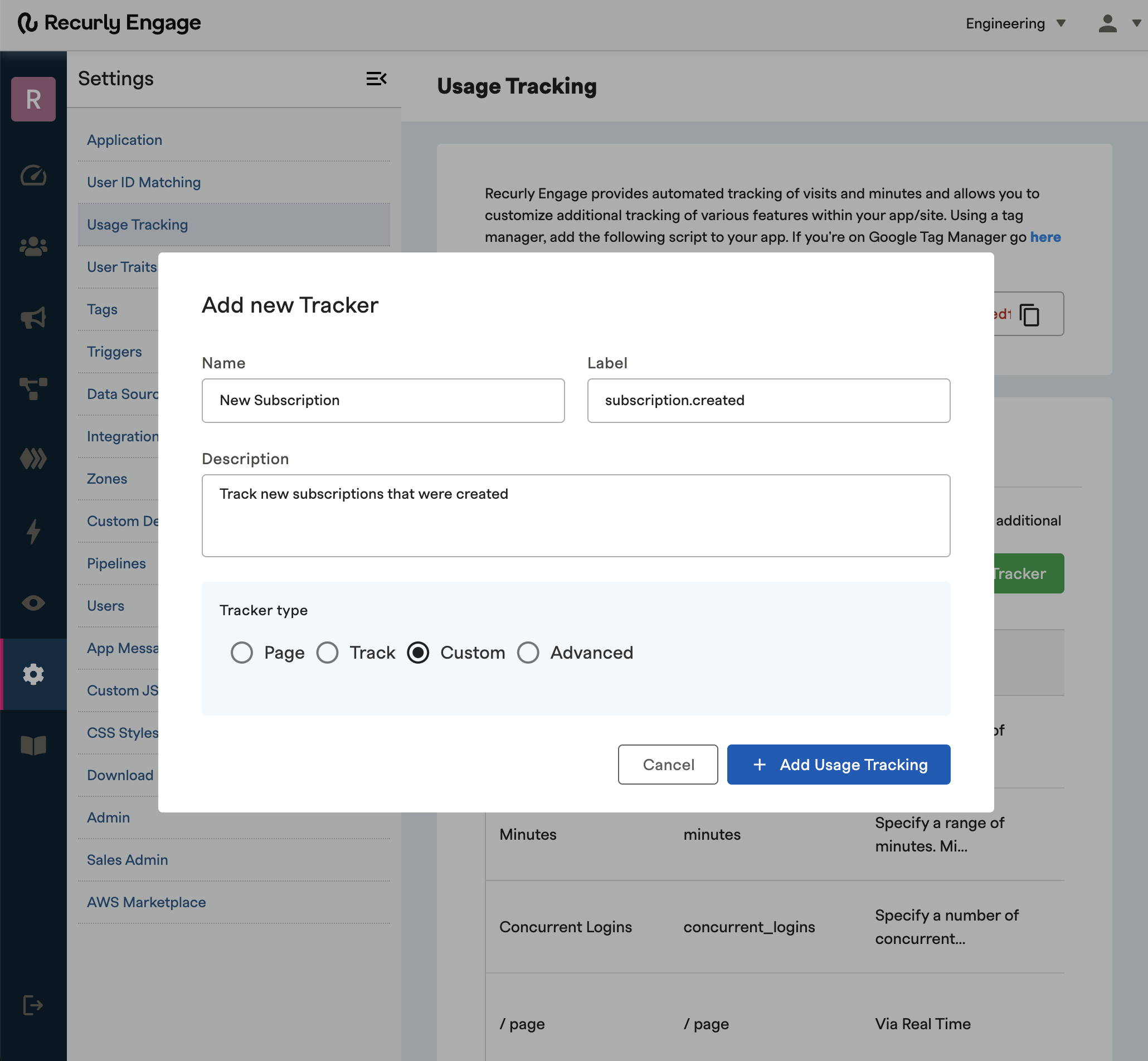
To implement additional Recurly events as custom goals beyond the default two, create usage trackers in Engage with the proper label attributes. These labels must match the Recurly webhook payload, using the convention object_type.event_type. Learn more about usage tracking.
- Navigate to Settings > Usage Tracking > +Add New Tracker.
- Create a new custom tracker by adding the name, label (be sure to match the Recurly webhook payload), and description of the tracker. Make sure the tracker type is set to "Custom".
Updated 15 days ago