
Payment failure
Configuration guide for creating a payment failure flow. It details how to set up targeted in-app prompts to help users update their payment information and reduce involuntary churn.
Prerequisites
- You must have Company, App Administrator, or App Member permissions in Recurly Engage.
Definition
Key benefits
Key details
A common problem for subscription businesses is a failed billing attempt — often caused by expired cards, fraud checks, or spending limits. Your payment processor may run some black-box recovery processes of its own, but only a small percentage of failures get resolved that way.
Recurly Engage adds another layer of protection against involuntary churn: a guide that prompts the user, over one or more visits, to update their payment information.
Guide
Log in to Recurly Engage
Access the Recurly Engage management console — known as Pulse — via Login. Pulse is your central interface for configuring applications, user traits, segments, prompts, guides, and integrations.
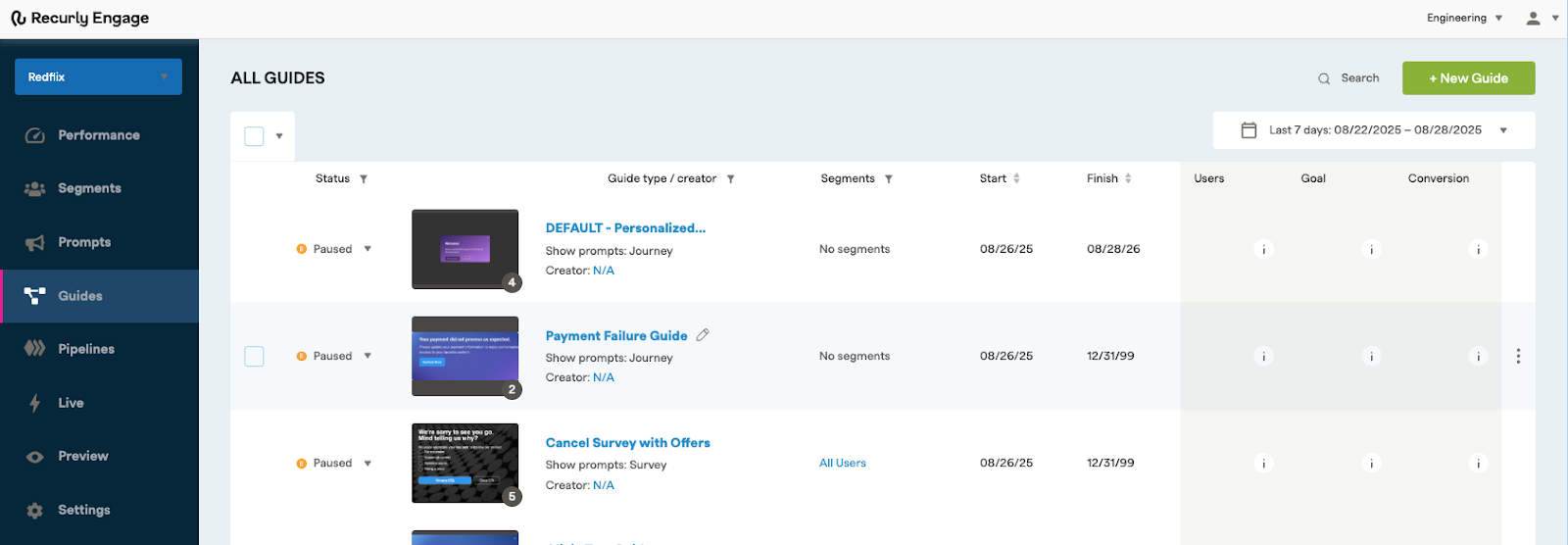
- Go to Guides in the main navigation.
- Select the pre-configured Payment Failure Guide.
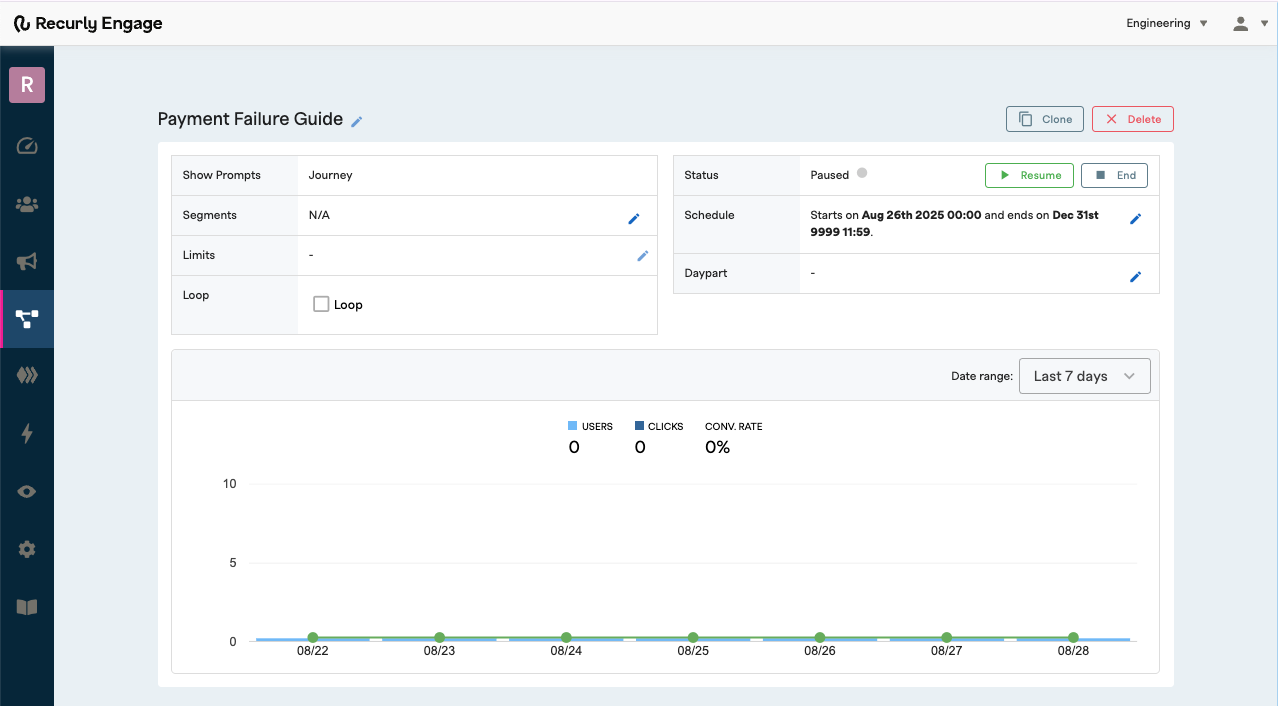
Add your trigger
In the Details section, set your trigger — the page or button on your site where the prompt fires. We recommend showing the Payment Failure prompt on every page except Billing Information, so users who click the prompt's CTA and land on Billing Information don't see the same prompt again. Configure a trigger for each prompt in the guide.
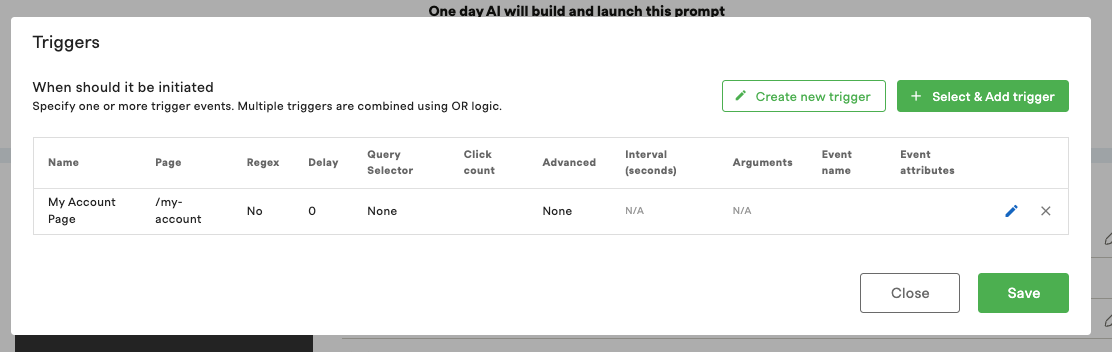
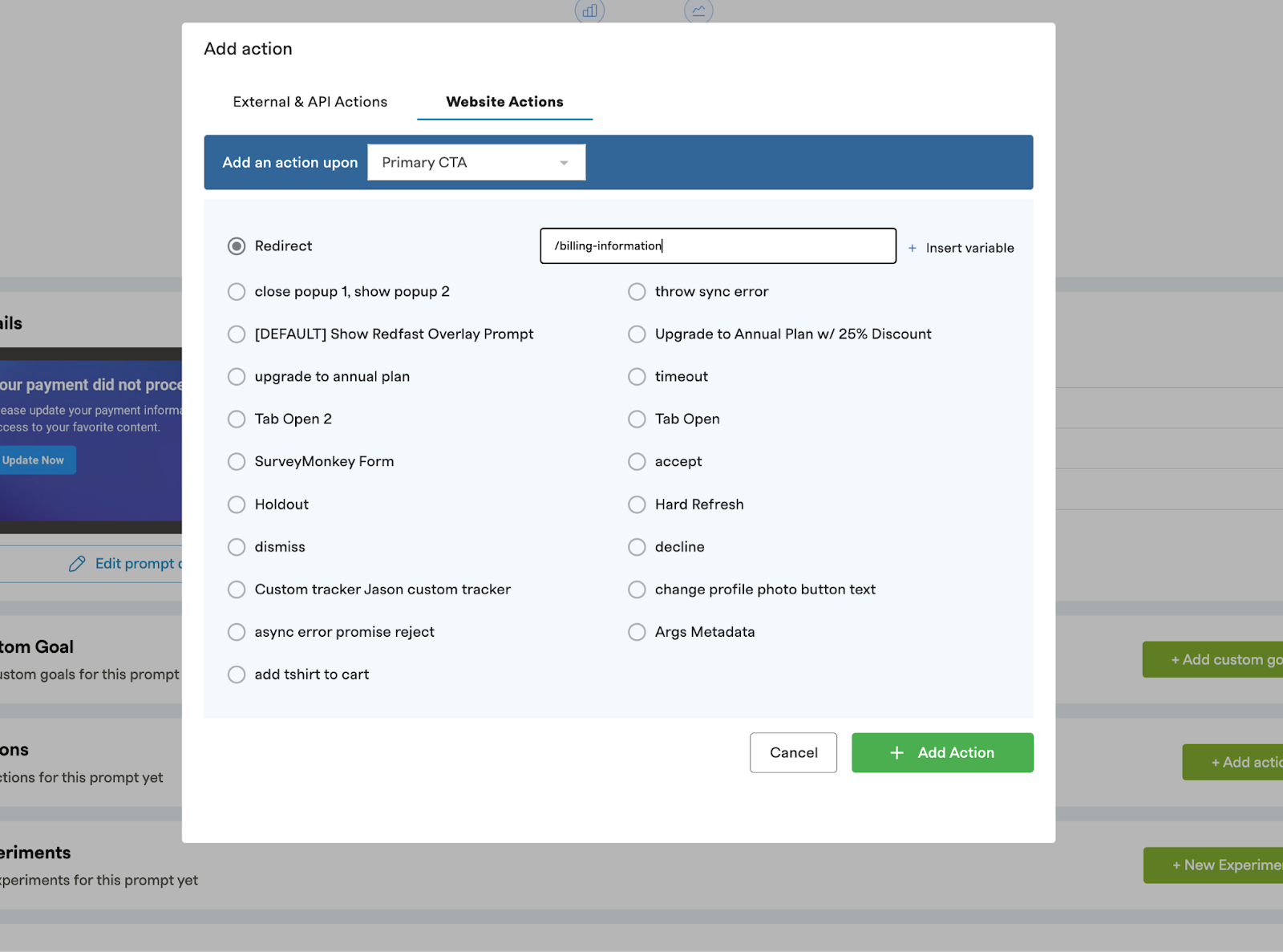
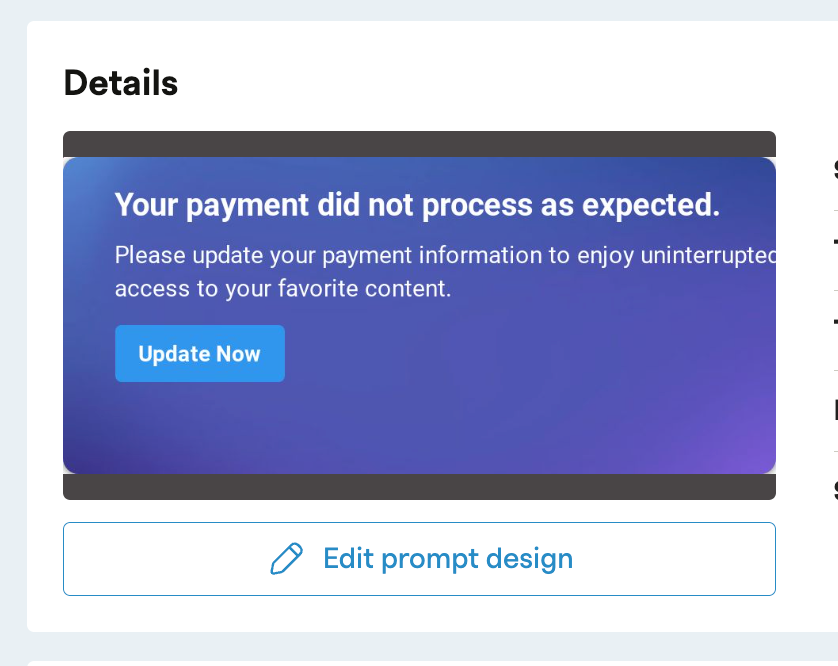
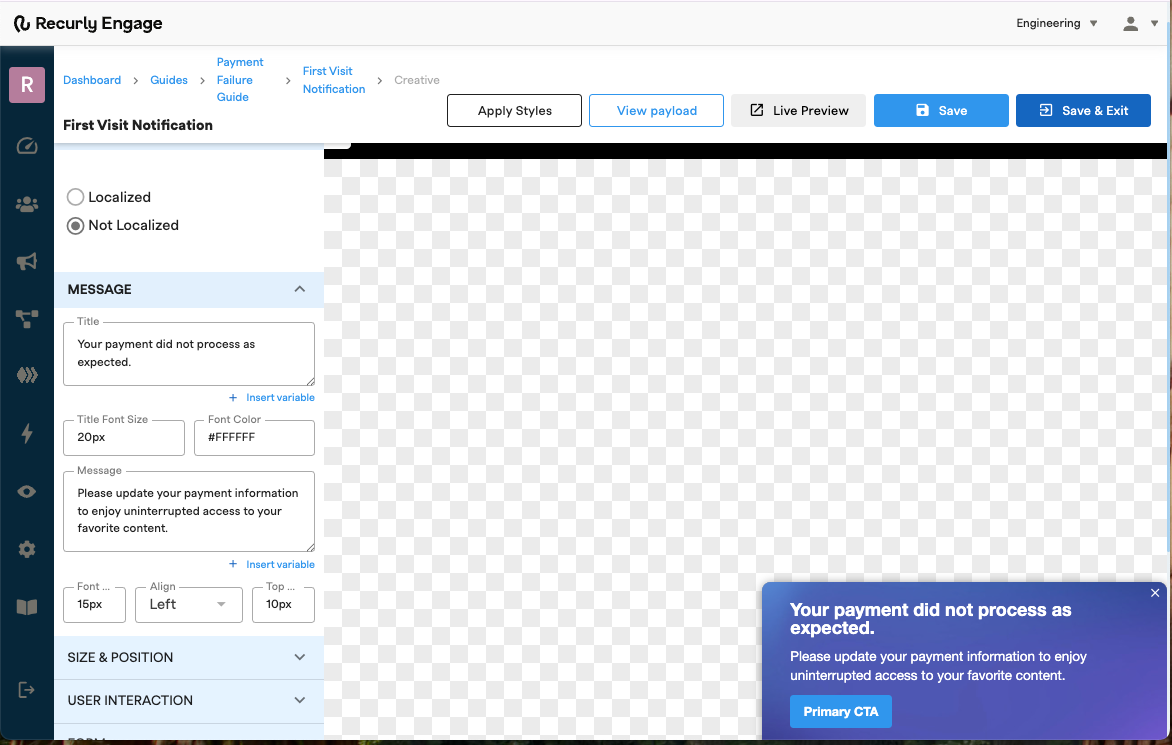
Customize the title, message, size, and styling to fit your messaging — make sure the message is clear and compelling, and configure the prompt for both Desktop & Mobile.
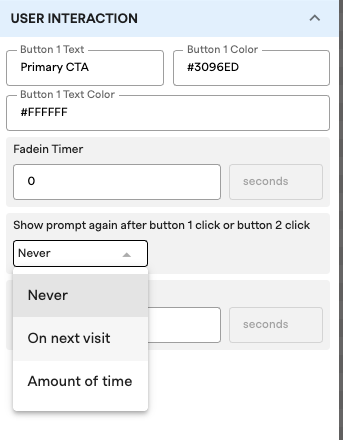
If you'd like, adjust the prompt's visibility settings in the User Interaction section to show it again after specific button clicks within your guide.
Repeat steps 5–8 for additional prompts
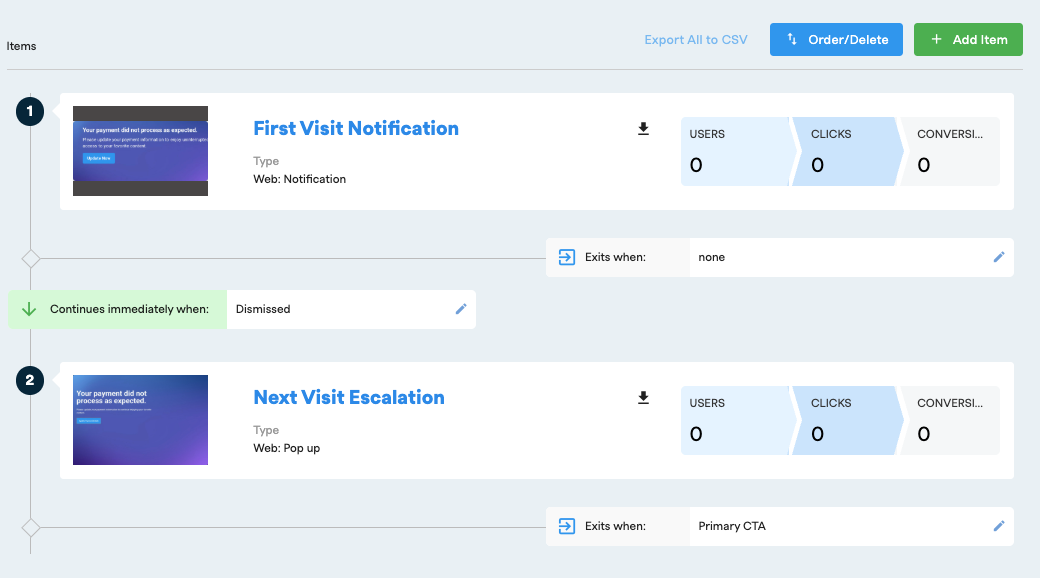
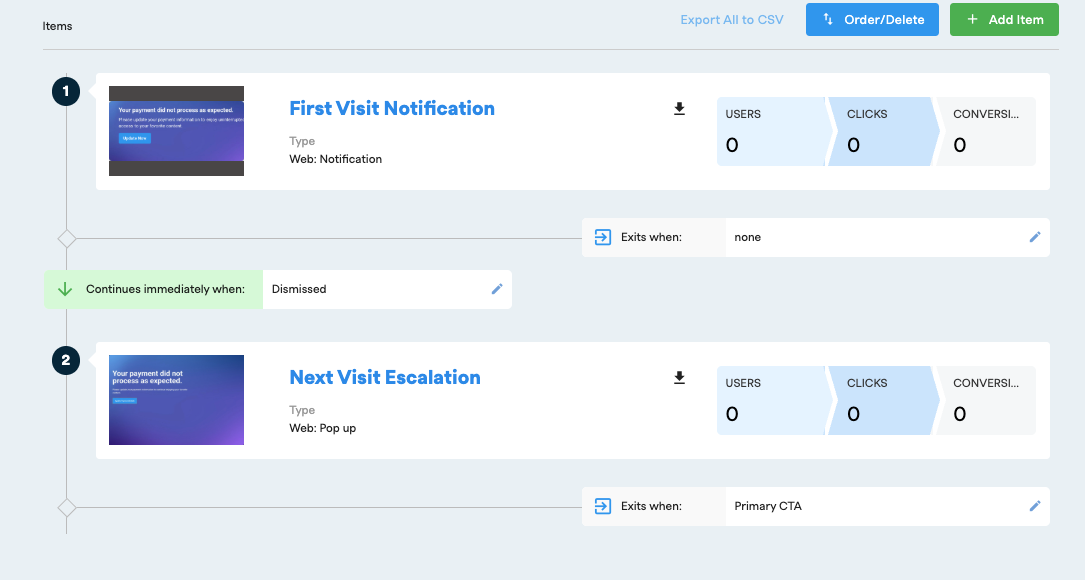
Additional prompts might present the actions tied to a user's response. Users need to interact with step 1 before they see step 2, so set up a trigger for each prompt in the guide — for example, selecting "Too expensive" could surface a follow-up "Price - Save offer" prompt that needs its own design and configuration. Be sure to set criteria for when the guide should continue or exit.
For involuntary churn, you can set a custom goal that requires the user to take an additional action — like updating their payment method — to recover their account. The primary button click gets recorded, but the conversion event (the redirect) is the metric that matters. You can configure an exit event to fire once that custom goal is met.
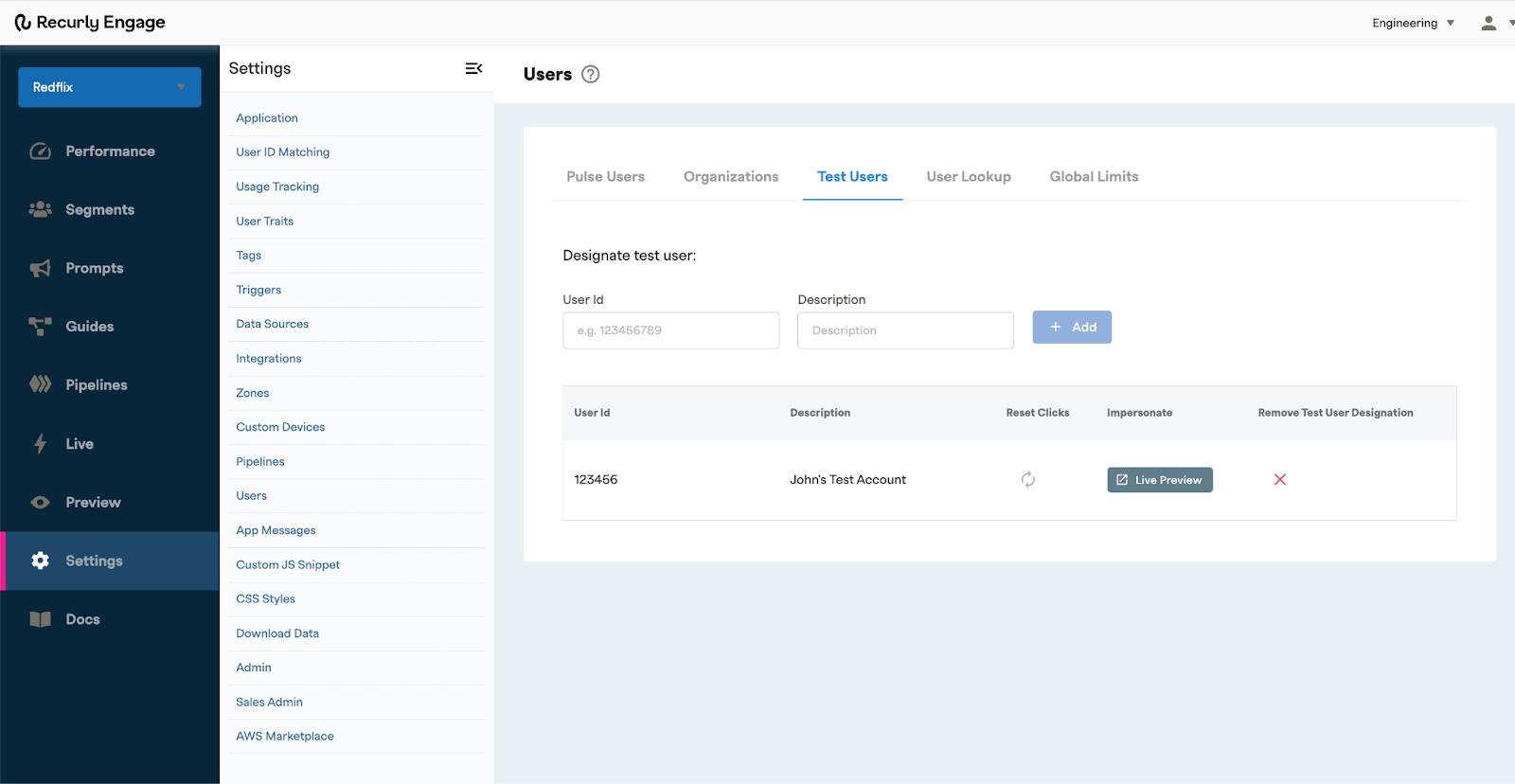
Test the flow on Live: add your own user ID to the Test Users segment under Settings > Users > Test Users.
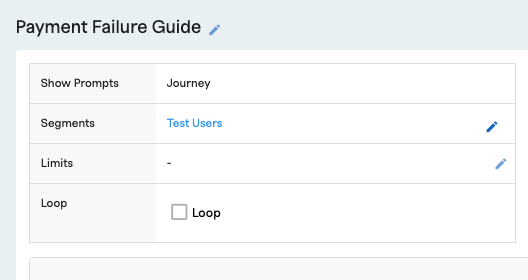
Add Test Users to the guide: add Test Users as the segment so only test users see the prompt.
Reset clicks during testing: if you need to relaunch the guide while testing, reset the user's clicks under Settings > Users > Test Users > Reset Clicks.
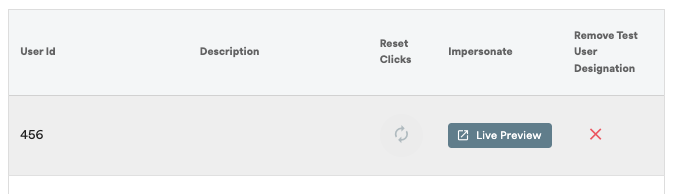
Use the built-in preview tool: alternatively, use the Preview Tool in the Live Preview section and set the user ID to the one you want to test.
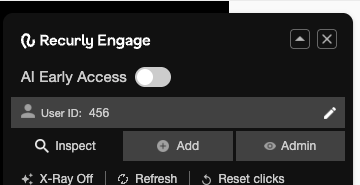
Once you're satisfied with your flow, remember to update your segments to target live users instead of test users, then set your guide's status to Live.
Estimate your savings
Every churn is lost revenue — and this flow can help you get it back.
Losing users isn't just a number, it's a direct hit to your bottom line. If you're losing 1,000 users a month at $10 each, that's $10,000 in lost revenue every month.
Recovering even a fraction of that can make a real difference to your business. By proactively re-engaging users, you can recover meaningful revenue and build a more sustainable subscriber base.
Want to see how you could turn churned users into recovered revenue?
Updated about 1 month ago