
Push prompts
Details on creating and managing push notifications (Push Prompts) in Recurly Engage.
Push Prompts deliver scheduled notifications straight to your users' devices—even when they're not in your app. Set up your channel credentials, sync device tokens, and build a segment to target exactly who should receive each message, all from Recurly Engage.
May not be included in all plans — contact Recurly Sales to discuss upgrade options
Prerequisites
- Company, App Administrator, or App Member permissions in Recurly Engage.
Definition
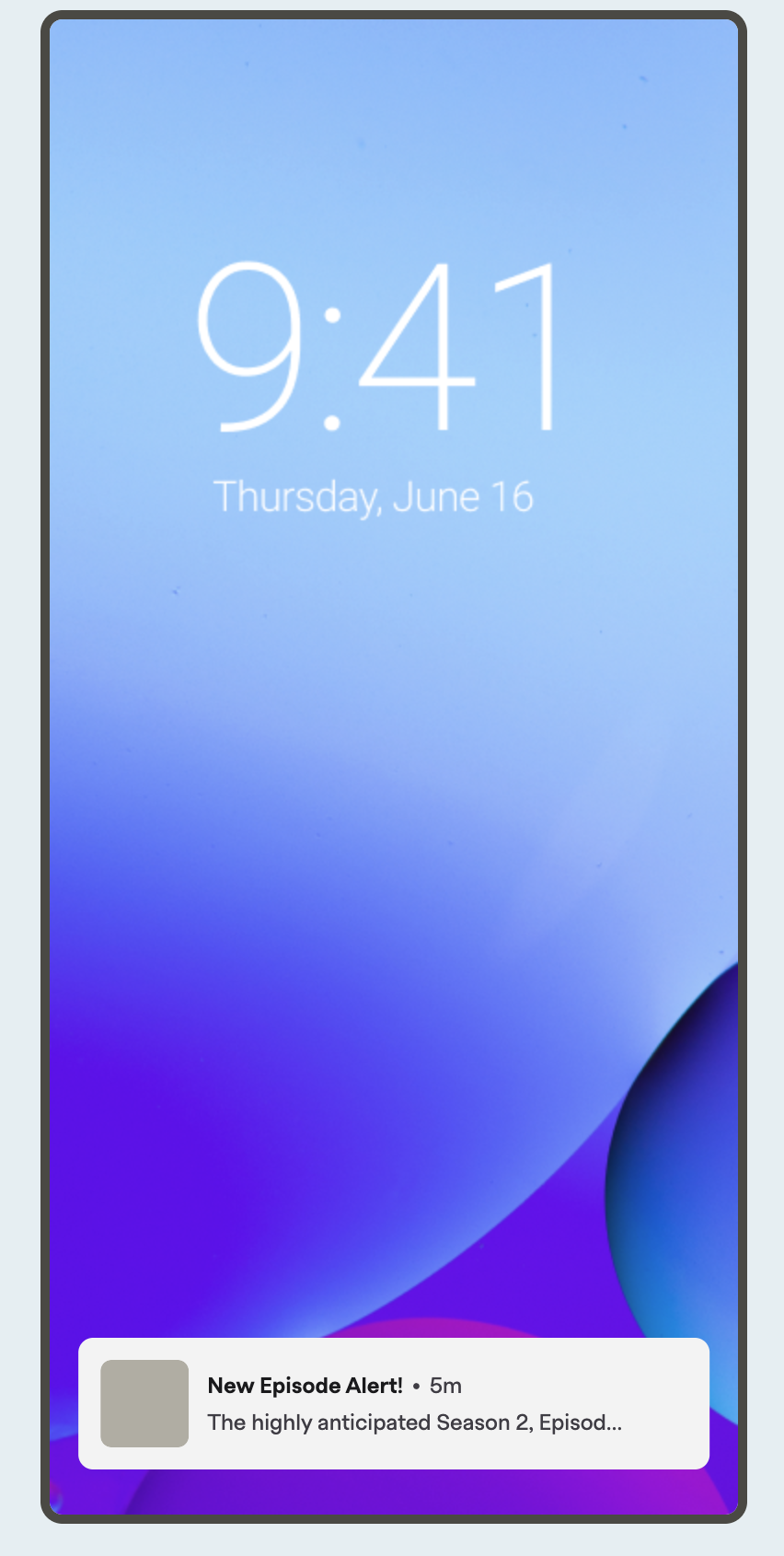
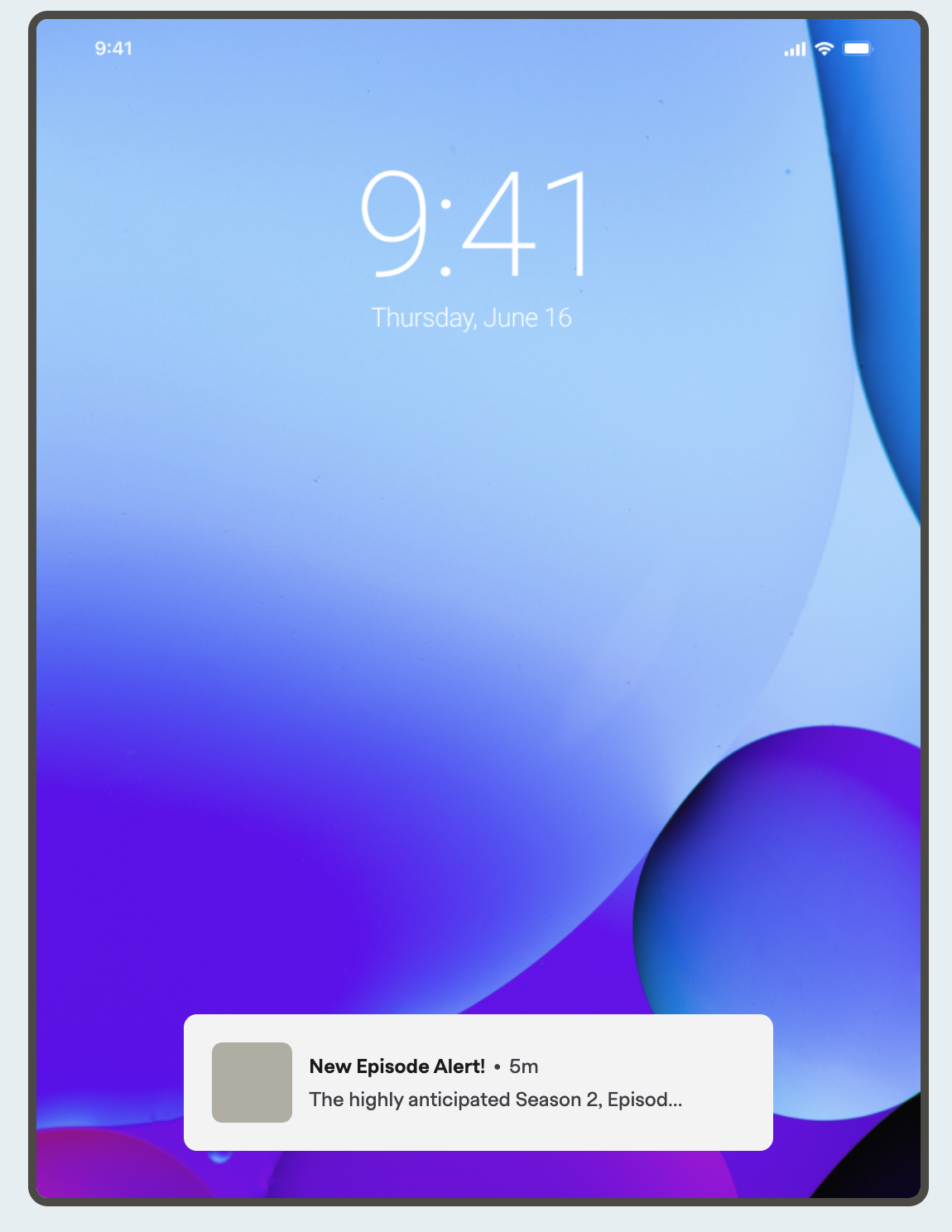
Push Prompts send scheduled notifications directly to your users' devices, even when they aren't actively using your app. Recurly Engage delivers these messages through supported channels, including Amazon Device Messaging (ADM), Apple Push Notifications service (APNs), and Firebase Cloud Messaging (FCM).
Key benefits
Direct engagementReach users on their devices with timely messages, increasing re-engagement.
Scheduled deliveryPlan notifications in advance to hit optimal send times.
Multi-channel supportSend via Amazon Device Messaging, Apple Push Notifications service, or Firebase Cloud Messaging.
Step-by-step guide
Before you begin, make sure you're an active Recurly Engage member on a plan that includes Push Prompts. If you're not, book a demo today.
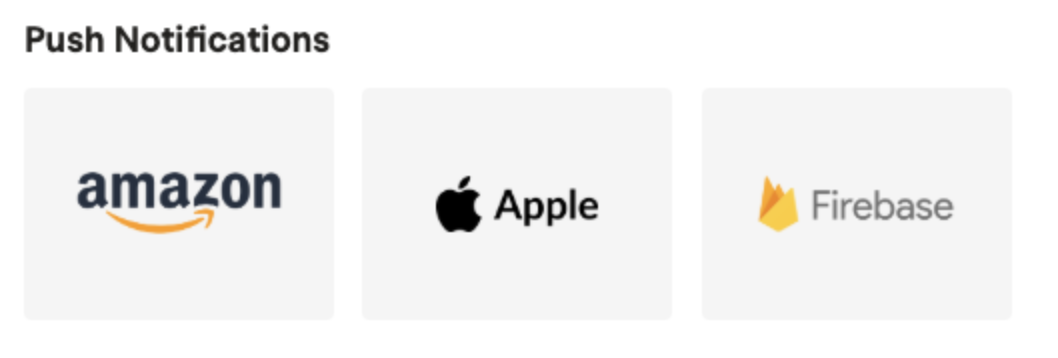
- In the Recurly Engage management console, Pulse, navigate to Settings → Integrations → Push Notifications.
- Enter credentials for the desired Push channels.
3
Create a custom device
Set up a custom device profile for push targeting.
- In Pulse, navigate to Settings → Custom Devices.
- Select + New Custom Device.
4
Create a Push Segment
Build a segment to target your push audience.
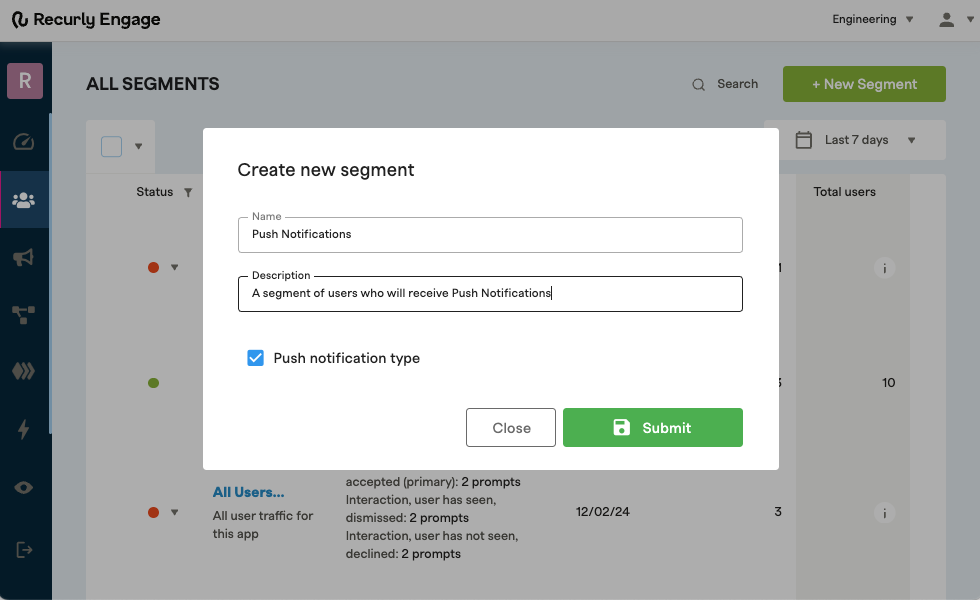
- In Pulse, navigate to the Segments section and select + New Segment.
- Select Push notification as the device type.
- Configure your segment with the appropriate settings, including channel type.
5
Create a Push prompt
Build the prompt that will deliver the notification.
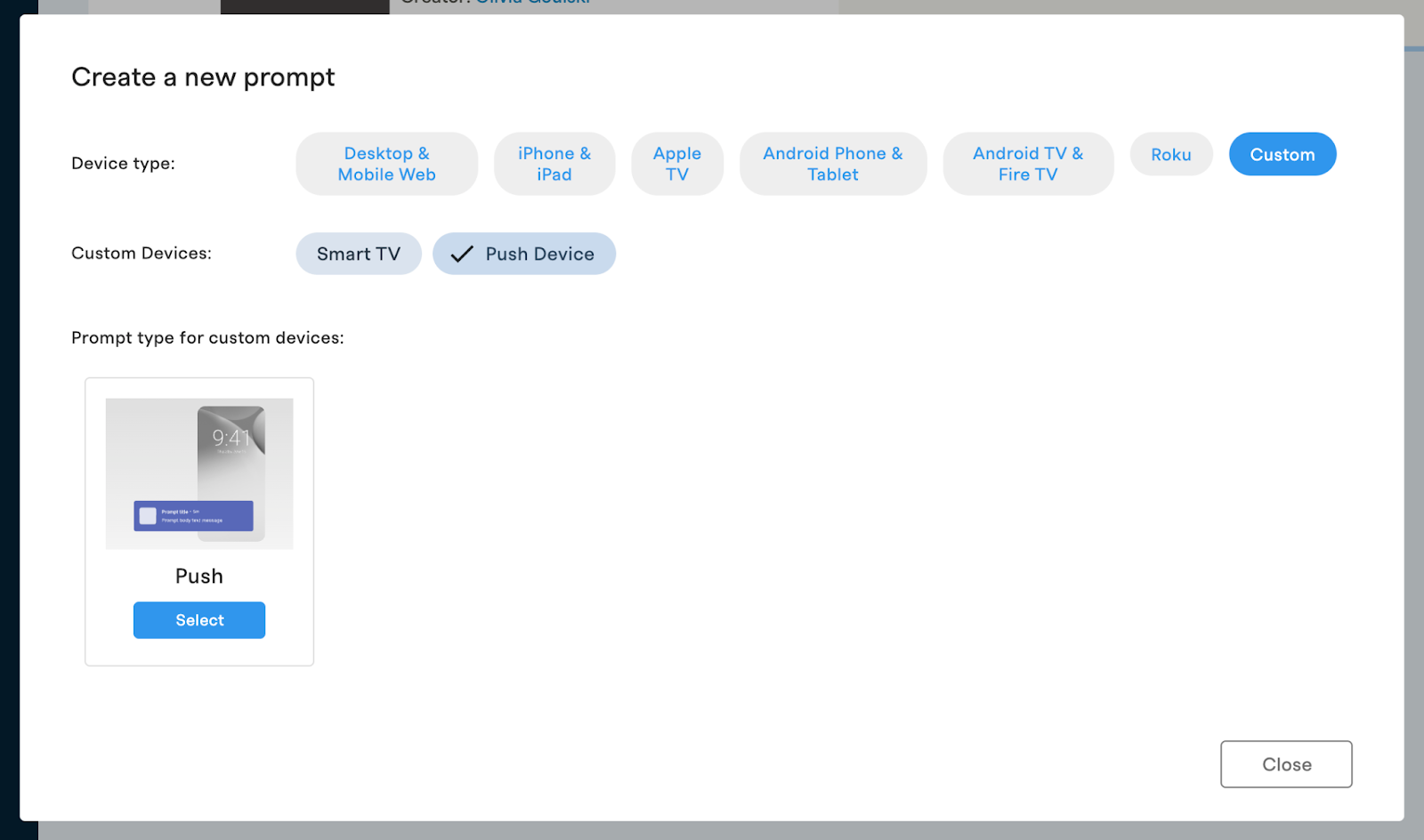
- In Pulse, navigate to the Prompts section and select + New Prompt.
- Select Custom for the Device Type and Push Device for the device type, then choose the Push prompt style.
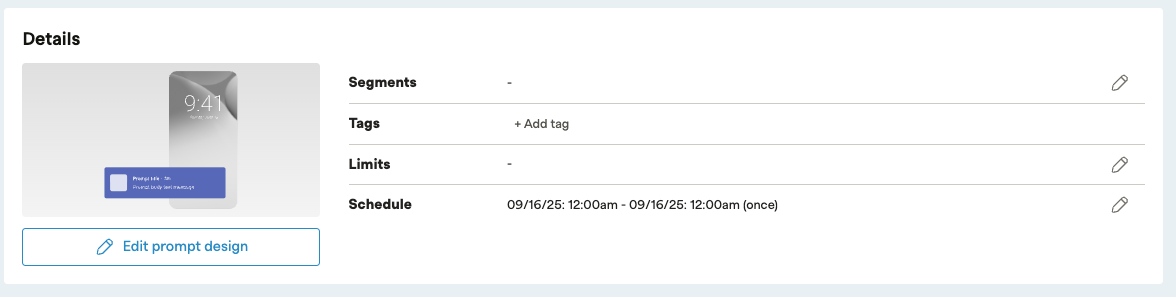
- Segment: choose the Push Notification segment to target specific users.
- Schedule: set the times your prompt will send.
- Customizable timing: set specific start and end dates and times for your scheduled push notification.
- Quiet times: establish periods during which notifications should not be sent, preventing disruptions.
- Local time zones: configure the task to run according to the user's local time zone, ensuring accurate timing regardless of location.
- Design: edit the prompt design to customize messaging, imagery, and actions.
Updated about 1 month ago
Did this page help you?